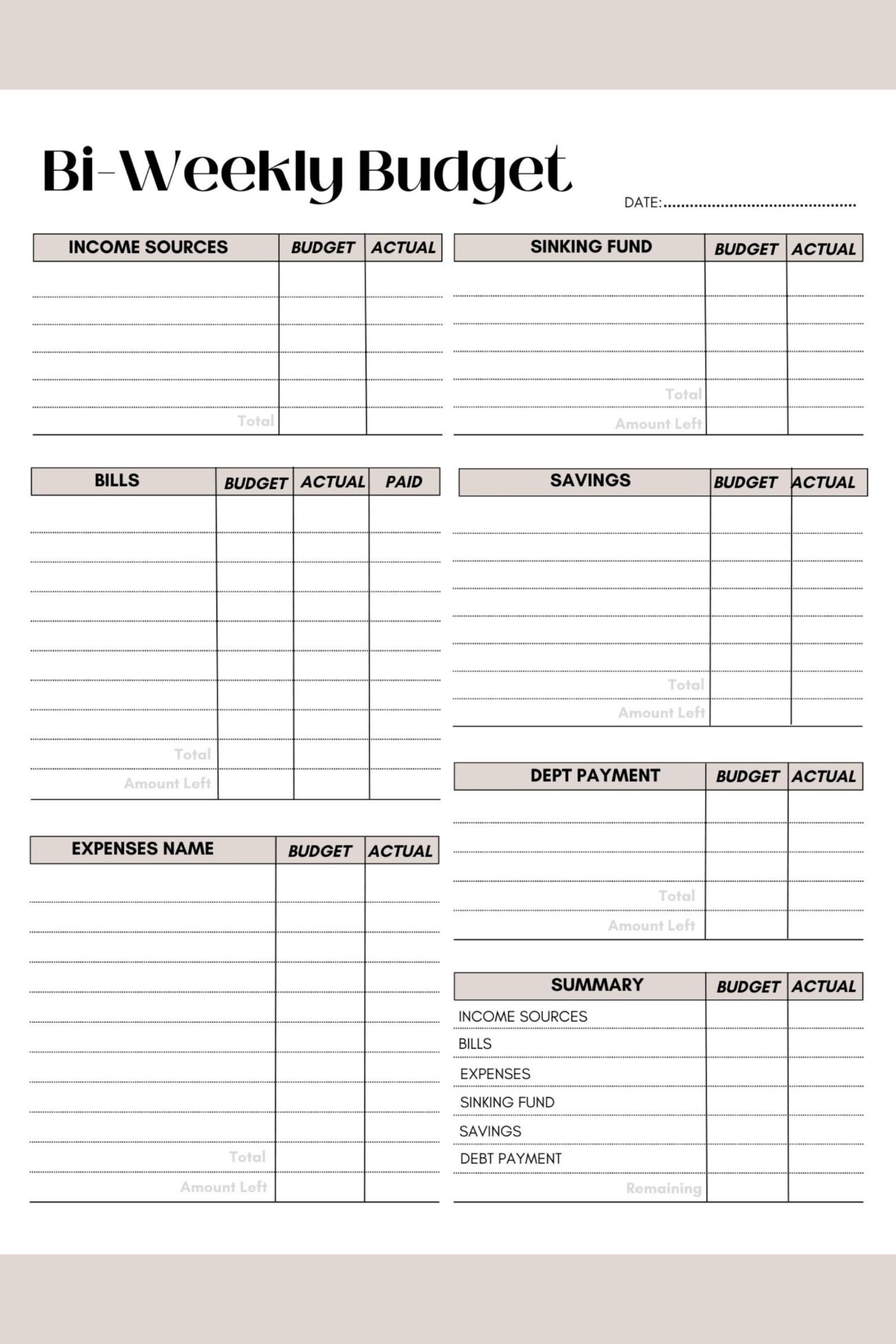
Managing your finances can often feel overwhelming, especially when you have to juggle multiple bills and expenses. That’s where the Bi Weekly Budget Planner Printable Free comes in. This resource is designed to simplify your budgeting process, making it easier for you to track your income and expenditures every two weeks. By using this planner, you can gain better control over your finances and make informed decisions about your spending.
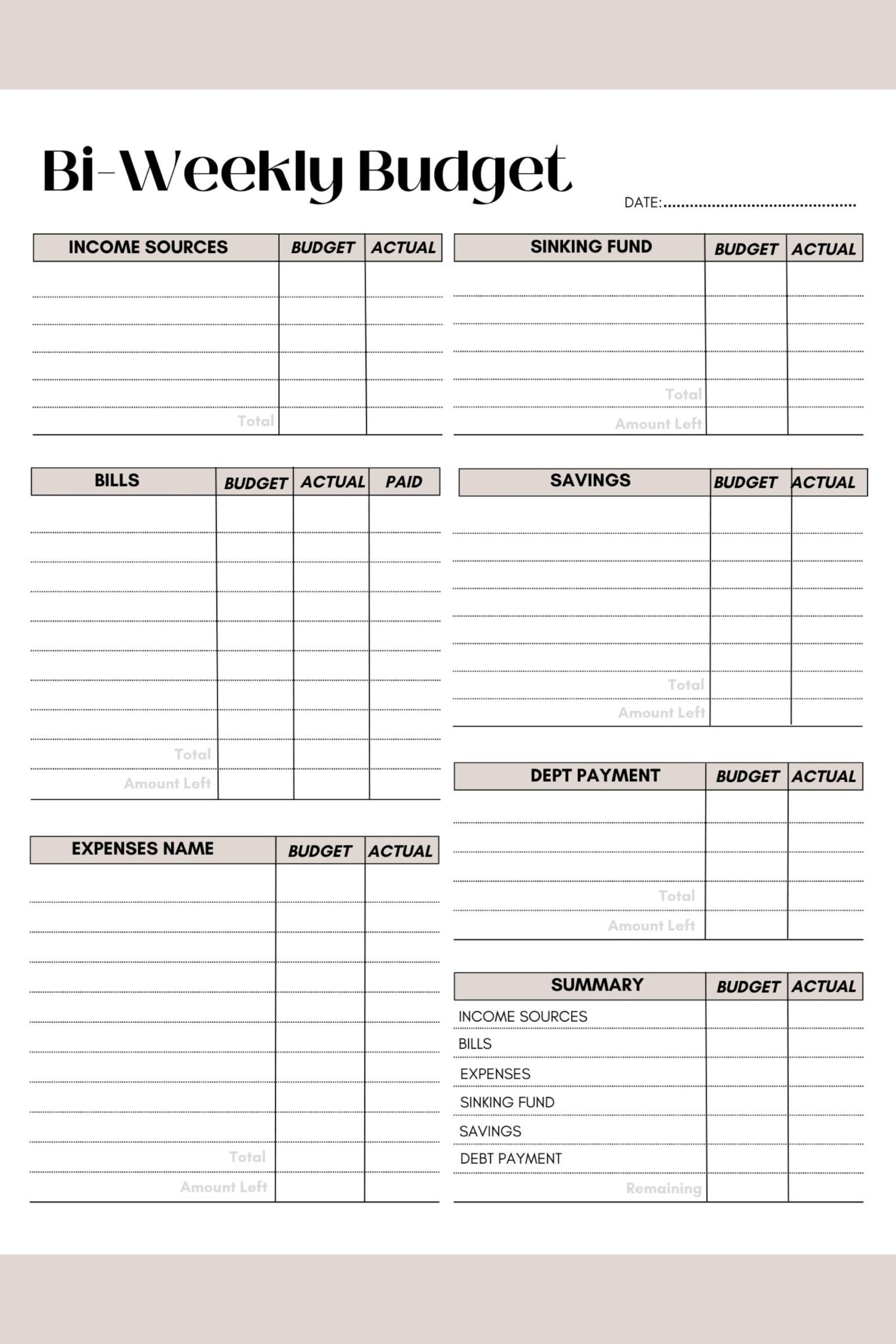
Understanding the Layout of the Bi Weekly Budget Planner
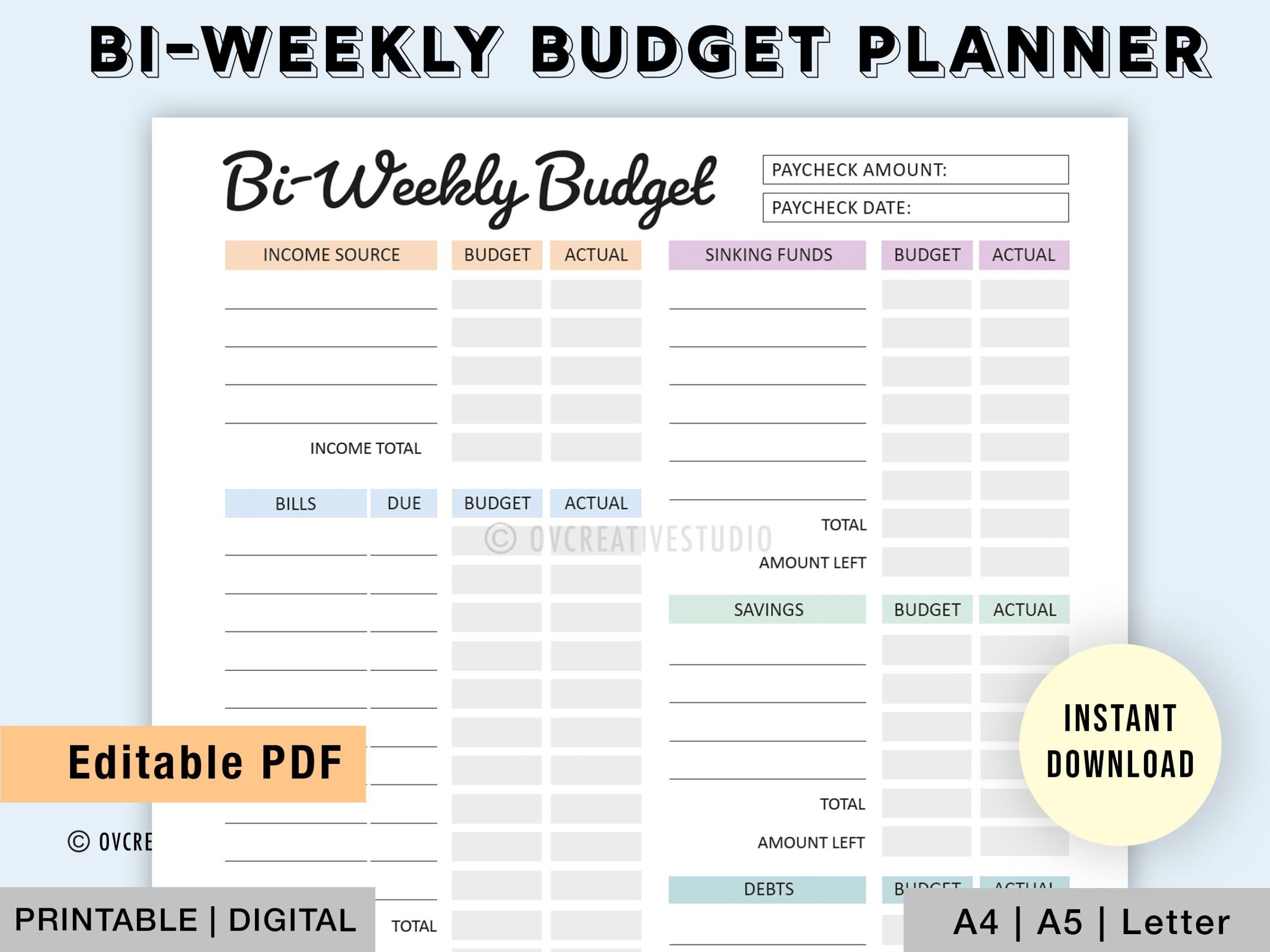
At first glance, the layout of the Bi Weekly Budget Planner is straightforward yet functional. The planner typically includes sections for income, fixed expenses, variable expenses, and savings. Each category is clearly labeled, allowing you to quickly identify where your money is going.
The income section usually provides space for you to list all sources of income, including your salary, side gigs, or any other revenue streams. This gives you a complete picture of your financial situation at the start of each budgeting period.
The fixed expenses section is where you can list your mandatory monthly expenses, such as rent, utilities, and insurance. This area is crucial because it reminds you of your non-negotiable costs.
Variable expenses, on the other hand, are the discretionary spending categories—like groceries, entertainment, and dining out. Here, you can set a budget for each category and track your spending against it.
Lastly, there’s a section for savings, which encourages you to set aside money for future goals or emergencies. By having a dedicated space for savings, you can prioritize it as an essential part of your budgeting.
How to Use the Bi Weekly Budget Planner Effectively
To make the most out of your Bi Weekly Budget Planner Printable Free, it’s essential to follow a systematic approach. Start by filling in your income sources. Be sure to include any additional income you might have, so you’re not underestimating your financial situation.
Next, move on to your fixed expenses. Write down the amounts you pay for each expense, and total them up. This will give you a clear understanding of how much of your income is already committed.
Then, tackle your variable expenses. Estimate how much you want to spend in each category for the two-week period. Remember, the goal is to be realistic here—don’t set yourself up for failure by underestimating your actual needs.
As you spend throughout the two weeks, track your expenses in the planner. This is where the real value lies. Regularly updating the planner helps you stay accountable and aware of your spending habits. At the end of the two weeks, review your budget. Did you stay within your limits? Where did you overspend, and why? This reflection will help you make adjustments for the next budgeting cycle.
Tips for Printing and Organizing Your Planner
When it comes to printing your Bi Weekly Budget Planner Printable Free, consider using high-quality paper. Cardstock often works best if you plan to use the planner frequently or even laminate it for durability. A clean, crisp print will make your planner easier to read and use.
Portrait layout tends to work better for most home printers, so opt for that if you’re unsure. If you’re using an online printing service, check their guidelines for optimal results. Download the planner in PDF format to avoid any formatting issues that can arise with image files.
Once printed, keep your planner in a dedicated binder or folder. This not only keeps it organized but also makes it easy to access when you need to update your budget. Consider adding dividers for each budgeting period or sections, so you can quickly flip to the information you need.
Common Mistakes to Avoid When Using Your Budget Planner
Even the best planners can be misused. One common mistake is not reviewing your budget regularly. It’s important to check in on your spending every few days rather than waiting until the end of the two-week period. This way, you can make adjustments in real-time rather than facing a surprise at the end.
Another mistake is underestimating variable expenses. It’s easy to think you’ll spend less on groceries or entertainment than you actually do. When setting your budget, use past spending as a reference to make more accurate predictions.
Lastly, don’t forget to account for unexpected expenses. Life happens, and sometimes you’ll have to deal with costs you didn’t plan for. Build a little cushion into your budget to accommodate these surprises.
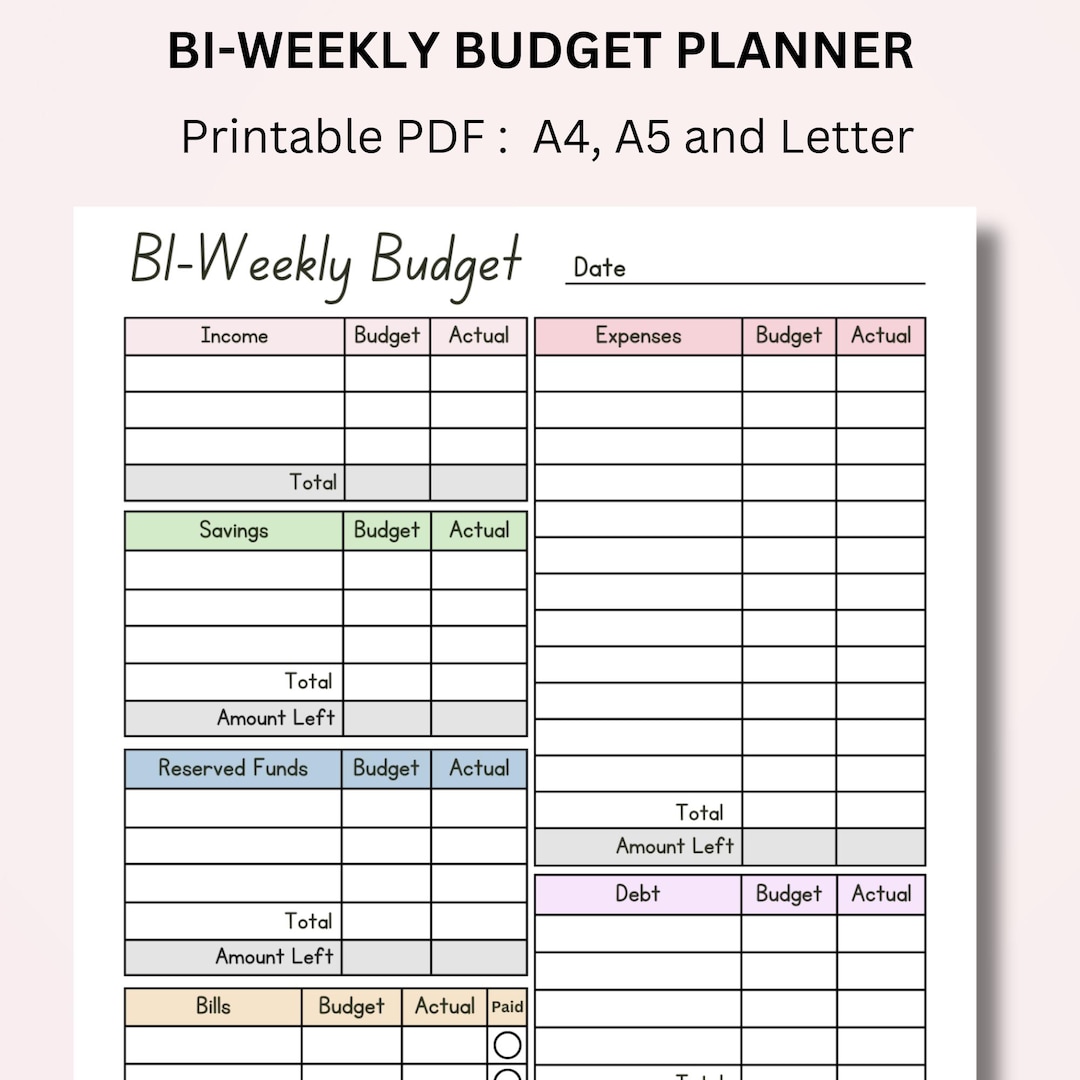
Tracking Progress and Making Adjustments
At the end of your two-week budgeting period, take some time to analyze your spending. Look at each category and see how you performed against your budget. Did you stick to your fixed expenses? How did your variable expenses line up with your estimates?
If you find that you consistently overspend in a particular area, it may be time to reassess your budget. Instead of cutting back drastically, consider adjusting your budget to make it more realistic. Perhaps you need to allocate more funds to groceries or entertainment based on your actual spending patterns.
Additionally, celebrate your successes! If you managed to save a bit more than planned, acknowledge that achievement. This positive reinforcement can motivate you to stick with your budgeting efforts in the future.
