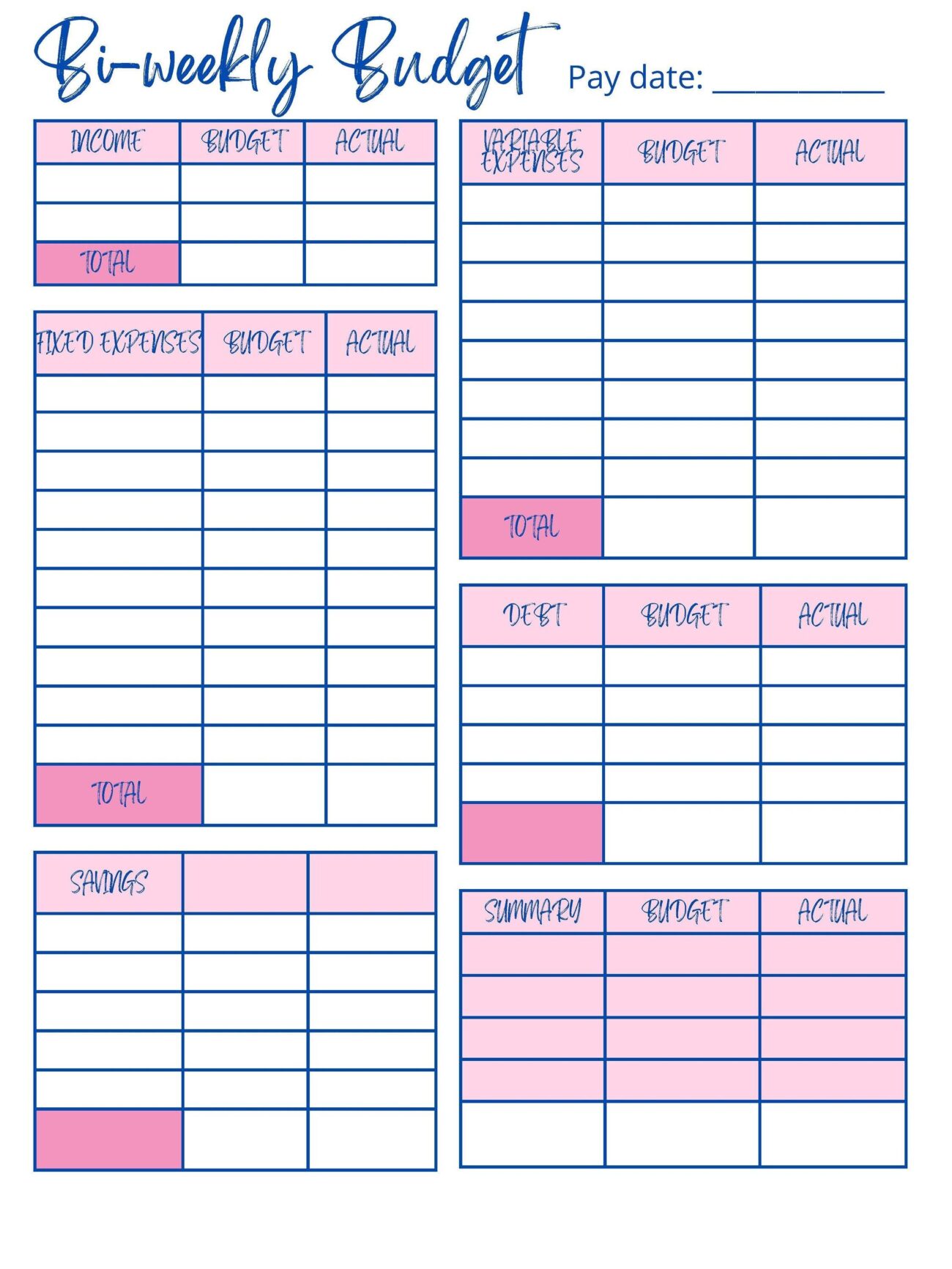
Managing your finances can often feel overwhelming, especially when trying to keep track of expenses over a longer period. The Free Bi Weekly Budget Planner stands out as a practical tool to help you streamline your financial organization. This planner allows you to break down your budget into manageable two-week segments, making it easier to monitor your income and expenditures without feeling lost in a monthly overview. Let’s explore how to effectively use this planner, what features to look for, and how to customize it to fit your lifestyle.
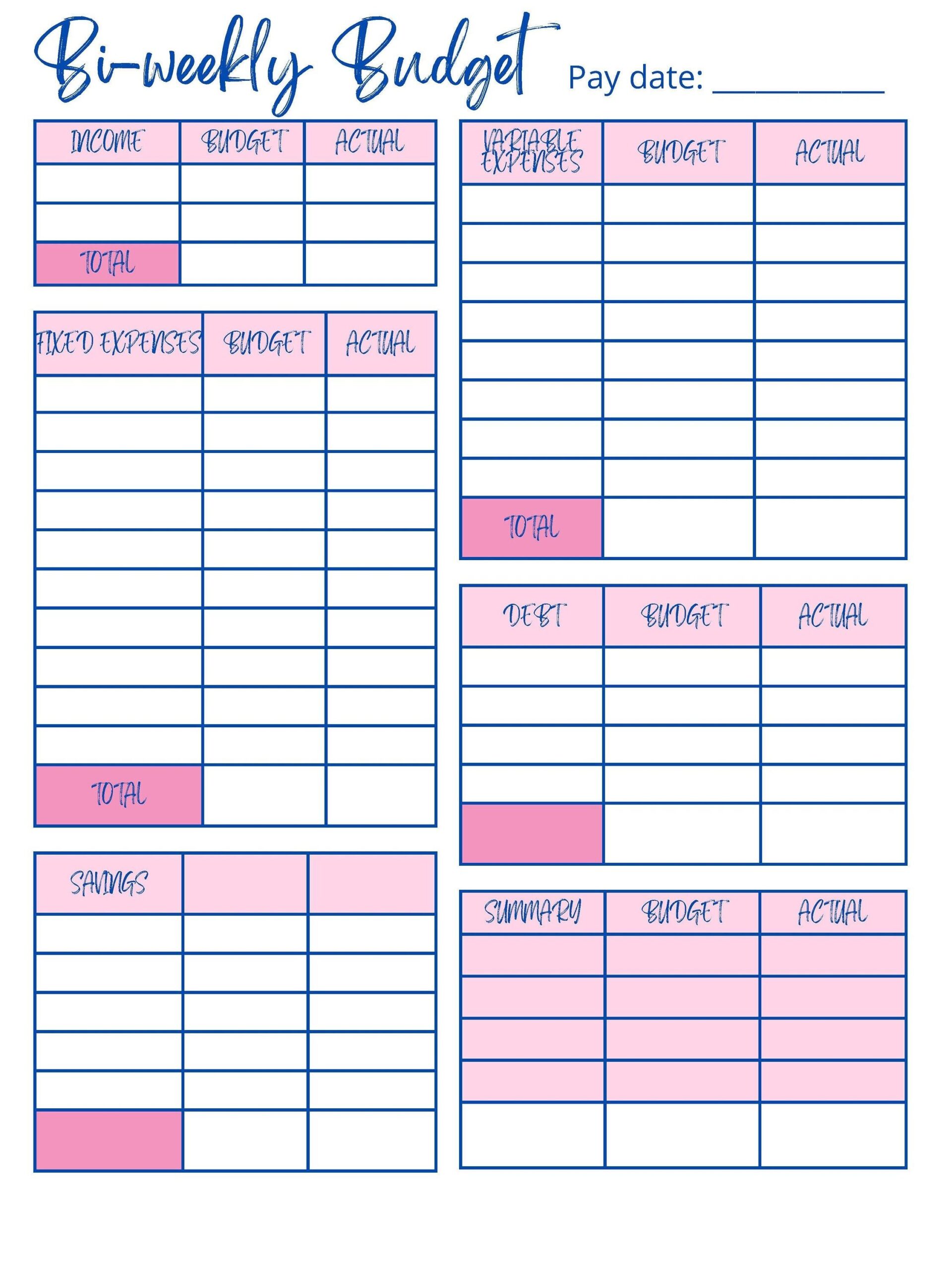
Understanding the Bi Weekly Budgeting Concept
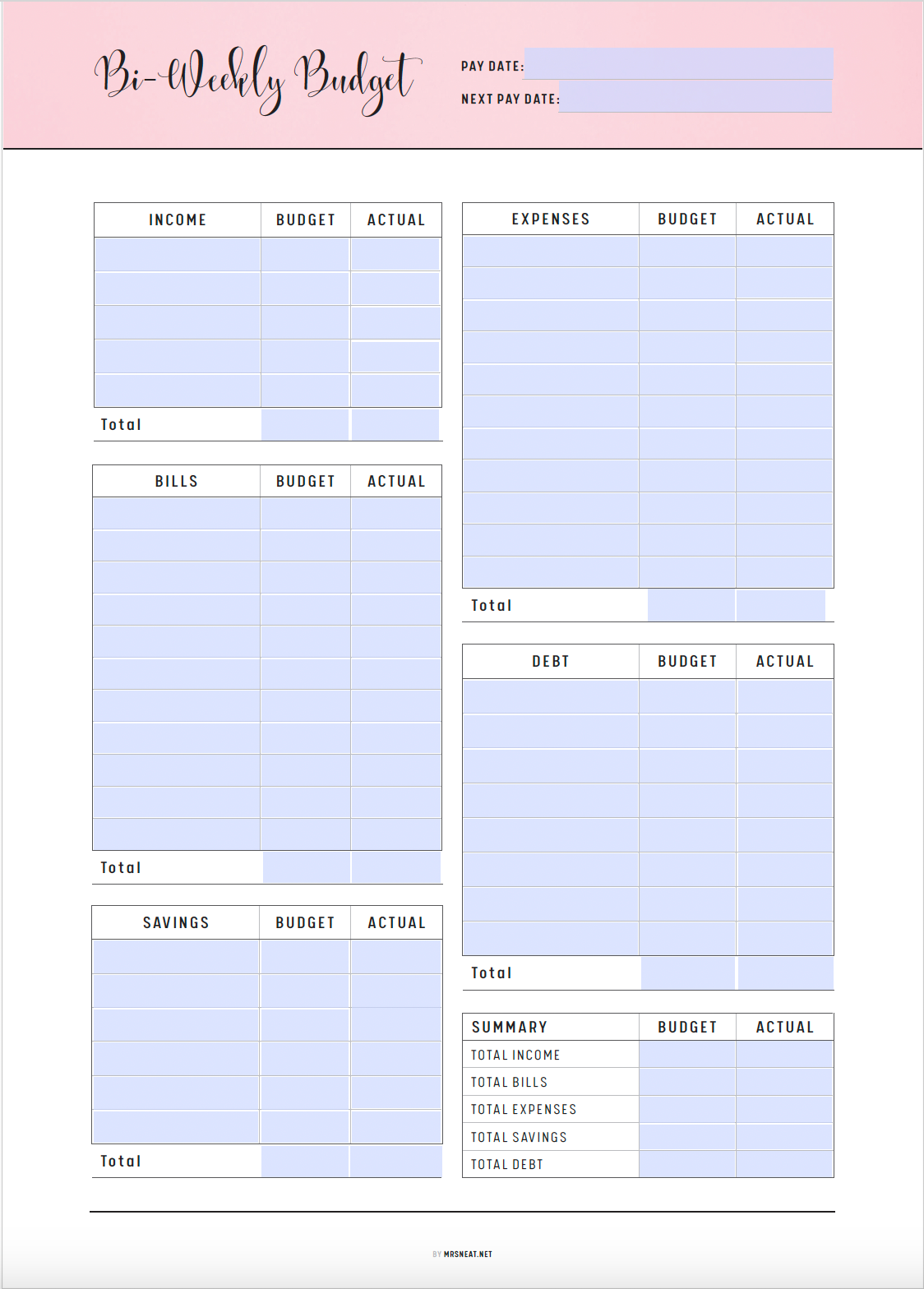
Bi weekly budgeting is an effective strategy for those who receive paychecks every two weeks. This method allows you to align your budgeting with your income frequency, ensuring that you can allocate funds appropriately throughout the month. Instead of trying to make a single monthly budget work, breaking it down into two-week periods can simplify things considerably.
Using a Free Bi Weekly Budget Planner helps you track your spending in real-time. You can see how much money you have available for discretionary spending after accounting for fixed expenses. This approach reduces the risk of overspending and helps you stay on top of your financial goals.
Key Features of a Bi Weekly Budget Planner
When selecting a Free Bi Weekly Budget Planner, consider the following features that will enhance your budgeting experience:
- Income Tracking: Ensure the planner includes sections for listing all sources of income, including salaries, side hustles, and passive income.
- Expense Categories: Look for a budget planner that allows you to categorize your expenses. Common categories include housing, utilities, groceries, transportation, entertainment, and savings.
- Space for Notes: A section for notes can be incredibly useful for tracking irregular expenses or jotting down thoughts about your financial goals.
- Visual Layout: Opt for a planner with a clear, easy-to-read layout. A well-organized planner can help you quickly assess your financial situation at a glance.
- Printable Format: The ability to print the planner means you can fill it out by hand, which many find helpful for engagement and retention.
How to Fill Out Your Bi Weekly Budget Planner
Filling out your Free Bi Weekly Budget Planner is straightforward but requires some initial preparation. Here’s a step-by-step guide to get you started:
- List All Sources of Income: Start by writing down all your income sources for the two-week period. Include your salary and any additional income streams.
- Detail Your Fixed Expenses: Write down all your fixed expenses that occur in this period, such as rent, mortgage, insurance, and subscriptions. These are expenses you can’t easily change.
- Estimate Variable Expenses: For variable expenses like groceries, entertainment, and dining out, estimate how much you expect to spend. Be realistic but also aim to keep these costs in check.
- Allocate Savings: Don’t forget to include savings in your budget. Aim to set aside a portion of your income for emergencies or future goals.
- Track Spending: As the weeks progress, keep track of your spending by filling in the actual amounts next to your estimates. This will help you see where you’re over or under budget.
- Review and Adjust: At the end of the two weeks, review your budget. Identify areas where you overspent and adjust your estimates for the next period accordingly.
Customizing Your Planner for Maximum Efficiency
To truly make the most of your Free Bi Weekly Budget Planner, customization is key. Here are some tips to personalize your planner:
- Color Coding: Use different colors for various categories of expenses. This visual aid can help you quickly identify where your money is going.
- Add Stickers or Symbols: If you enjoy a more decorative approach, consider using stickers or symbols to denote certain spending habits or goals, making budgeting more enjoyable.
- Incorporate Goals: Designate a section for financial goals, such as saving for a vacation or paying off debt. Write down your goals and track your progress directly in the planner.
Common Printing Options for Your Planner
When it comes to printing your Free Bi Weekly Budget Planner, consider these options to ensure the best quality:
- Paper Type: Using a heavier paper, like cardstock, can make your planner more durable. If you plan to use markers or highlighters, this will prevent ink from bleeding through.
- Size: Standard letter size (8.5 x 11 inches) is common, but if you prefer something more portable, consider printing it in half-size (5.5 x 8.5 inches).
- Binding: If you want to keep your planner organized, consider using a binder or folder. This allows you to add or remove pages as needed.
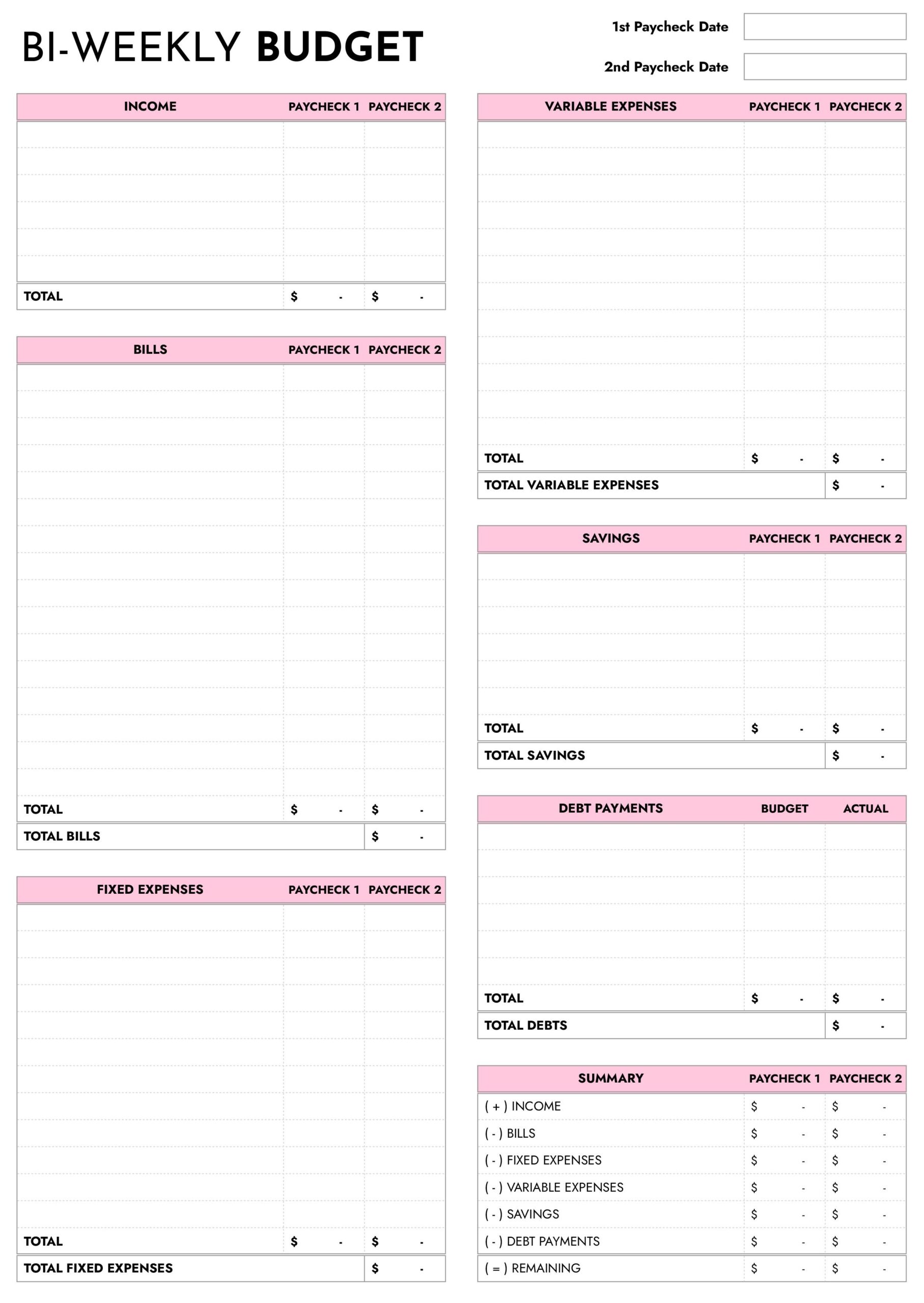
Keeping Your Budget on Track
Staying disciplined with your budget can be challenging. Here are some practical tips to ensure you stick to your bi weekly plan:
- Set Reminders: Use your phone or calendar to set reminders for when to review and update your planner.
- Weekly Check-Ins: Establish a routine to check in on your budget weekly. This allows you to make adjustments before the next paycheck arrives.
- Accountability Partner: Share your budgeting goals with a friend or family member who can help keep you accountable.
Remember to adapt your approach as you learn what works best for you. Budgeting is a personal journey, and what suits one person might not work for another.
